In October of 2024, former Colorado county clerk Tina Peters was sentenced to just under nine years in prison for tampering with voting machines after the 2020 election.
According to the BBC, "she helped breach Mesa County's election computer systems and allowed an unauthorised individual to access voting equipment and election records." Additionally, "She carried out the breach amid unsubstantiated claims that mass voter fraud had caused former President Donald Trump to lose the White House in the last presidential election."
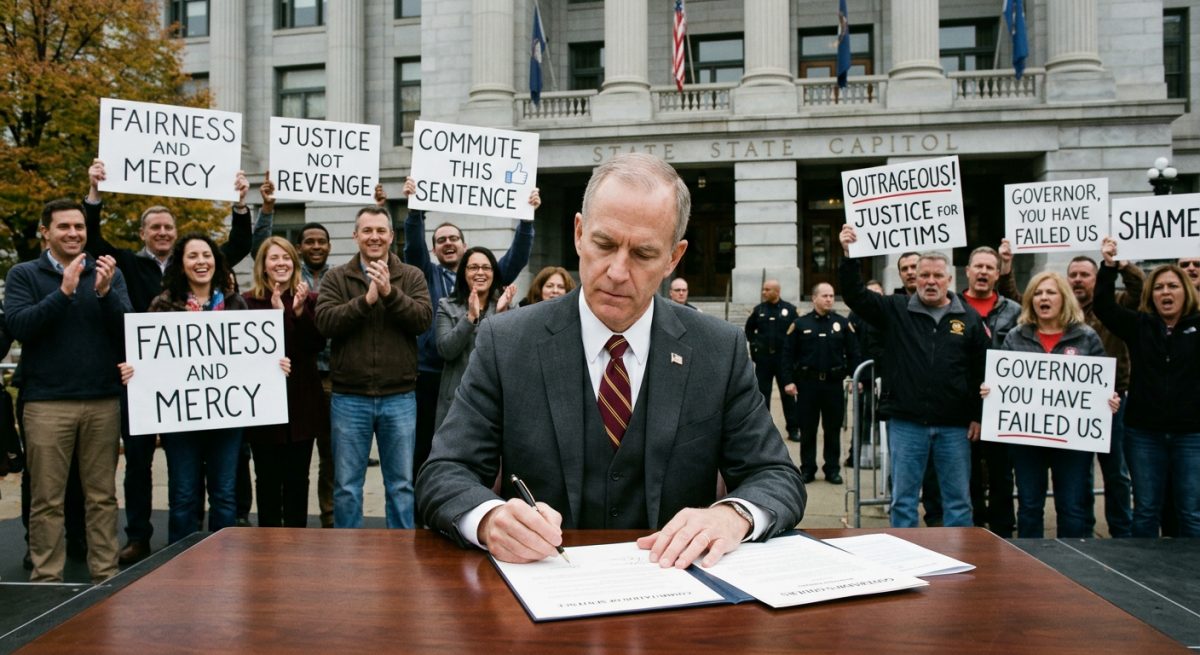
On Friday, Colorado Governor Jared Polis, a Democrat, announced he was commuting Peters's sentence, and she would be released on parole in June. According to the BBC, Peters's attorney issued a statement on her behalf in which she said, "I made mistakes, and for those I am sorry." She also said, "I have learned and grown during my time in prison and going forward I will make sure that my actions always follow the law, and I will avoid the mistakes of the past."
Governor Polis explained his decision to commute Peters's sentence on his Facebook page. He said, in part,
I believe based on the facts of the case that her sentence is simply disproportionate for a first time, non-violent offender. It’s one of my bedrock beliefs that our laws should be applied fairly, and I simply do not believe that was what happened in this case. A three judge panel of the Colorado Court of Appeals agrees, ordering just last month that she be resentenced.
Governor Polis noted that his commutation would reduce Peters's sentence to 4 and 3/8 years in prison. Is this enough? Colorado's Secretary of State Jena Griswold called the commutation "an affront to our democracy." According to the BBC, many Democrats and even some Republicans also viewed the commutation negatively. In contrast, "Moments after the announcement, President Donald Trump, who for months has pushed for her release, wrote on social media: 'FREE TINA!'."
A commutation involves lessening or replacing a criminal penalty with a less severe one. It does not absolve the convicted criminal of the crime. This is in contrast with pardons, where a criminal conviction (and the criminal penalty) is essentially erased. So, Peters will still be a convicted felon.
In this case, a 68-year-old woman will have spent almost the last 4 and a half years in prison for what she did. She is no longer in her clerk position. She is a convicted felon. She expressed remorse for what she did. Nevertheless, while I am not as outraged as some others, I still have serious misgivings about the commutation.
While her crime was not violent, it was not simply a run of the mill first-time offense. One of the most important principles in our country is that the people have a right to select who will govern by voting in free and fair elections. Peters was entrusted by the people to help carry out one of these free and fair elections. Instead, in the misbegotten belief that Donald Trump had been nefariously denied victory in the 2020 presidential election, she undermined the integrity of elections in Colorado by allowing a politically motivated third party to improperly access election systems and records.
Perhaps most important about this matter is how it may embolden others or at least reduce deterrence. How will people who might potentially commit similar acts in the future behave having seen the Governor's commutation in this case? Will they be more likely to try to tamper with an election in the belief that they may have their sentence reduced like Peters, particularly if it is their first offense?
This is reminiscent of actions taken by the President. President Trump pardoned or commuted the sentences of many of those who were involved in the January 26, 2021 insurrection, including those convicted of sedition. This sent the message that you can commit some of the most serious crimes against the people of the United States and face little to no penalty as long as you acted in support of the right people.
While I too am sympathetic toward an apologetic, elderly, first-time offender, I fear that by giving Peters a break despite having undermined our elections, we may be further motivating others to commit similar or worse actions. Additionally, such an action undermines our claims that we view the integrity of fair and free elections as sacred. Harm to sacred principles and ideas is probably not the most appropriate time for leniency.